
Improve oxygen availability
HBOT increases oxygen dissolved in blood plasma, helping deliver oxygen to threatened tissue. That support can be valuable when local oxygen levels are too low for healing.2
Scottsdale & Glendale, Arizona
Specialized support for threatened tissue, backed by a clinic with deep roots in postsurgical care.
When a graft or flap struggles to receive enough oxygen, HBOT can help support tissue survival alongside surgical and wound care. Compromised grafts and flaps are a recognized hyperbaric indication, with patient selection and timing central to getting the most from treatment.1, 2
RX-O2 began with grafts, flaps, and postsurgical indications. Today, patients seek out our Scottsdale and Glendale clinics for that experience and access to a medical team that understands both hyperbaric medicine and surgical recovery.

This is where our story began
A premier Arizona destination for graft, flap, and postsurgical hyperbaric care.
Our early work centered on grafts, flaps, and recovery after surgery. That foundation continues to shape how we evaluate a threatened wound, plan hyperbaric treatment, and communicate with the patient’s surgical team.
Medical Director Dr. Marvin A. Borsand, a board-certified cosmetic surgeon, brings extensive experience with cosmetic procedures, wound care, and postoperative concerns. He has incorporated hyperbaric medicine into his practice since 2008.
Patients can access his expertise for review of their health history, surgical records, graft or flap concerns, and recovery progress. When a case needs more support, that review can help guide advanced wound-care planning and coordination of further surgical evaluation or treatment.
Our goal is to bring informed attention to the whole situation: the tissue, the operation, the patient’s health, and the next steps most likely to support recovery. Your operating surgeon remains a key partner in the plan.
Ask our team to coordinate Dr. Borsand’s review when scheduling. An urgent circulation problem needs immediate surgical assessment.
Understand the tissue at risk
A skin graft is transferred tissue that must establish nourishment and a new blood supply from the area beneath it. A flap carries its own blood supply, either through an attached tissue connection or blood vessels reconnected during surgery.
Compromise means that circulation or oxygen delivery is inadequate for the tissue’s needs. The cause may involve the wound bed, injured small vessels, swelling, prior radiation, or a problem with arterial inflow or venous drainage. Identifying the cause helps determine the right treatment.1, 2
HBOT is used selectively for threatened tissue. Healthy grafts, uncomplicated incisions, and routine cosmetic-surgery recovery do not automatically qualify for this indication.
Support the tissue. Support the recovery.
The purpose of treatment is to give viable but struggling tissue a better opportunity to survive and heal, while the surgical team addresses the underlying problem.
HBOT increases oxygen dissolved in blood plasma, helping deliver oxygen to threatened tissue. That support can be valuable when local oxygen levels are too low for healing.2
Clinical research reports improved healing and tissue preservation in selected patients. A 2026 review of comparative studies found a favorable pooled effect on short-term graft and flap survival in the trials it analyzed.3
Published series describe threatened flaps healing without operative revision in some patients. Preserving tissue may reduce the extent of additional reconstruction, although further surgery is sometimes still necessary.4, 5
You do not need all the answers before contacting us. Bring your questions, your current care plan, and what you hope to understand. A consultation can help you weigh potential benefits, uncertainty, practical needs, and costs before making a treatment decision.
Research that informs your options
From comparative studies to reports of threatened breast and reconstructive flaps, the literature provides a clinical basis for discussing HBOT with your surgical team.
Literature checked
September 14, 2026
Comparative evidence · Systematic review · May 2026
Carter and colleagues · 24 studies · 2,246 participants across included conditions
This review evaluated HBOT in serious soft-tissue injuries involving, or potentially requiring, graft or flap surgery. A pooled analysis of four randomized trials favored HBOT for graft/flap survival within four weeks. The authors supported its use for selected serious injury and reconstruction situations.
The populations included trauma, crush injuries, and other substantial wounds. Evidence certainty ranged from very low to moderate; these results cannot be applied to every uncomplicated cosmetic procedure. This was a UHMS-supported review.
Read the May 26, 2026 reviewThreatened mastectomy flaps · Case series · 2023
Nasr and colleagues · 17 patients · 25 breasts
After nipple-sparing mastectomy, the authors reported flap salvage without operative revision in 22 of 25 breasts treated with HBOT. Three required reoperation.
This was a small retrospective series without a control group and with short follow-up. The result describes that study’s patients, not an RX-O2 success rate or an individual guarantee.
Read the threatened-flap studyMastectomy flap ischemia · Case series · 2021
Spruijt and colleagues · 50 breasts
In this series of compromised mastectomy flaps, 29 of 50 breasts recovered without an additional operation. The findings help explain clinical interest in HBOT as part of a tissue-preservation plan.
There was no comparison group. Some tissue-depth scores worsened, and 21 breasts required additional surgery. The study cannot establish how much of the recovery was caused by HBOT.
Read the 50-breast case seriesMolina-Vega and colleagues reviewed 18 studies with 1,281 patients across varied plastic-surgery indications. They described favorable healing and tissue-salvage outcomes in several settings. However, the pooled complication estimate was not statistically conclusive, and most included studies were case series. The review supports continued investigation and individualized use, rather than a universal success percentage.
Idris and colleagues reviewed seven studies involving 63 patients and described encouraging results for healing and reconstruction salvage. The authors also noted the shortage of rigorous trials and clearly defined control groups. This review overlaps with some of the studies discussed elsewhere on this page.
Larson and colleagues reported flap survival in 11 of 15 selected patients receiving HBOT for threatened or failing reconstructive flaps. The small retrospective design limits predictions for an individual patient, but the report adds to the clinical experience supporting HBOT in tissue salvage.
Perrins’ 1967 controlled skin-graft study is an early part of this evidence base. Later reviews describe better graft take with HBOT. Its age, small size, and historical surgical methods limit direct comparison with modern practice, but it remains useful background alongside newer clinical evidence.2, 3
Francis and Baynosa review experimental and clinical evidence for improved tissue oxygenation, healing activity, new-vessel development, and reduced injury when blood flow returns after ischemia. They emphasize assessing and correcting surgically treatable causes of compromise. HBOT supports tissue salvage; it cannot remove a clot, untwist a vessel, or restore tissue that has already died.
Compromised grafts and flaps are an established hyperbaric indication, but the evidence and expected benefit vary with tissue type, severity, timing, and the underlying circulation problem. A coordinated evaluation helps determine whether HBOT may preserve threatened tissue while surgical treatment and wound care continue.
The RX-O2 treatment experience
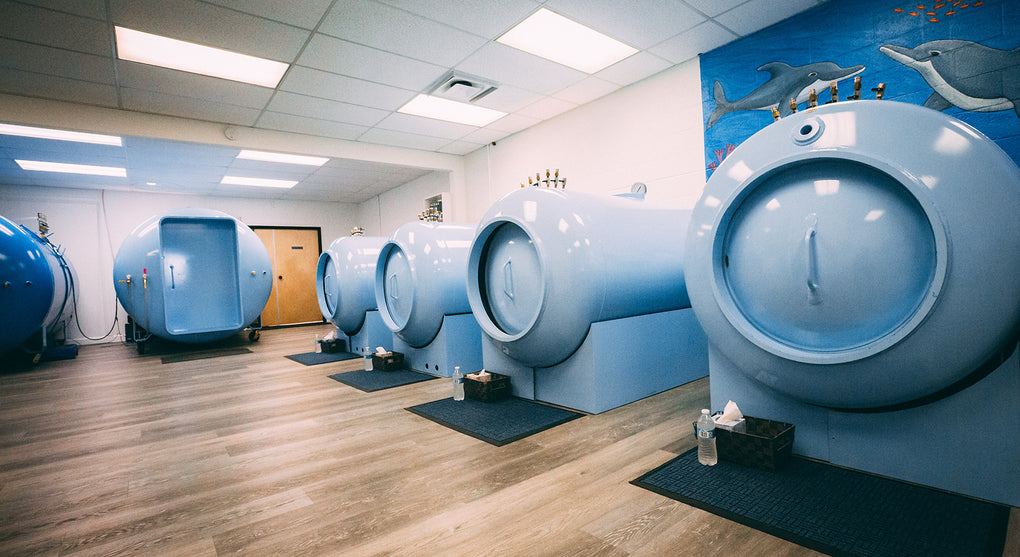
Our Scottsdale and Glendale clinics pair physician-led treatment with FDA-cleared hard-shell chambers and hyperbaric technicians certified through the National Hyperbaric Safety Association.
Coverage and choice of care
Qualifying compromised skin grafts are included in Medicare’s national HBOT coverage policy. Coverage for a particular graft or flap depends on the diagnosis, medical necessity, documentation, and the applicable insurance plan.10
Patients often seek out RX-O2 specifically for our postsurgical experience and access to Dr. Borsand’s cosmetic-surgery expertise. They want a team that can look closely at the operation, their health history, and the tissue that needs support.
Before treatment, confirm both your benefits and RX-O2’s billing arrangements with our team and your insurer. A covered indication does not automatically mean that a particular visit or facility will be reimbursed. Routine postoperative recovery or cosmetic surgery alone does not establish eligibility.
For suspected acute compromise, arrange surgical evaluation immediately while coverage questions are addressed.
For patients and referring surgeons
Tell us that your concern involves a graft, flap, or postsurgical complication so we can help coordinate the appropriate medical review.
Have your procedure date, operative report, surgeon’s contact information, medication list, and recent wound assessments available. Our team can explain how to provide records securely.
Your clinician considers the graft or flap, health history, circulation concerns, prior radiation, infection, and any additional care needed. Ask about coordinating Dr. Borsand’s review.
If HBOT is appropriate, the medical team prescribes the course and reassesses progress. Wound care, surgical follow-up, and any urgent intervention remain part of the plan.
Call the clinic directly to discuss the concern, urgency, and availability. Share the operative findings and any measures already taken to restore circulation. A referral form or online booking should not delay urgent surgical management.
Make an informed next step
It can support tissue preservation in appropriately selected cases, particularly when oxygen delivery is impaired. Your surgeon and hyperbaric clinician need to identify the cause, treat correctable circulation problems, and evaluate whether tissue remains viable. Treatment cannot guarantee complete survival.1, 3
Immediately. Contact your operating surgeon if the tissue becomes pale, dusky, blue, unusually cold, darker, or increasingly painful. Earlier recognition allows treatment decisions while tissue may still be salvageable. Do not wait for a routine HBOT appointment if circulation could be compromised.
Sometimes tissue can recover without an additional operation, but HBOT does not replace needed surgery. A blocked vessel, compressed blood supply, or other mechanical problem may require urgent correction. Debridement, infection treatment, wound care, or further reconstruction may still be needed.
No. The recognized graft-and-flap indication concerns selected compromised tissue. Normal, healthy grafts and flaps do not routinely need HBOT. Broader postoperative recovery questions require their own assessment and should not be confused with treatment of an ischemic complication.1
RX-O2’s Medical Director, Dr. Marvin A. Borsand, is a board-certified cosmetic surgeon with experience in postoperative care and hyperbaric medicine. Ask our team to coordinate his review of your history, procedure, and graft or flap concerns. His input complements your operating surgeon’s care.
Qualifying compromised skin grafts appear in Medicare’s HBOT coverage policy. Eligibility and payment depend on your situation, documentation, plan requirements, and the treating facility’s billing arrangements. Confirm these details with RX-O2 and your insurer before assuming coverage. Routine cosmetic recovery is not automatically covered.10
The medical provider determines treatment pressure, frequency, and duration according to the tissue’s condition and response. An acutely threatened flap may need a different schedule from a later wound-healing concern. We discuss the prescribed plan and review points rather than using one package as a protocol for every patient.
You can contact RX-O2 for an evaluation after surgery elsewhere in Arizona or out of state. Bring the operative report and your surgeon’s contact details. We can help coordinate hyperbaric care while your surgical team remains involved, with local referral or additional evaluation when needed.
Share all medications, implanted devices, drains, dressings, lung conditions, ear or sinus problems, and recent treatments. An untreated pneumothorax is a contraindication. Possible risks include pressure-related ear or sinus injury, temporary vision changes, and enclosure-related anxiety; uncommon serious risks include oxygen-toxicity seizures and lung injury. Follow all preparation rules because oxygen increases fire risk. Electronics and batteries are not allowed.11, 12 Review visit preparation.
Contact RX-O2 in Scottsdale or Glendale. We welcome patients and surgical referrals from across the Phoenix area. Book a consultation online or call the appropriate clinic below. For an actively changing graft or flap, contact your surgeon immediately and call us about coordinating hyperbaric evaluation.
Local care, two Valley locations
Looking for a hyperbaric consultation near Phoenix? RX-O2 offers two locations for patients across the Valley. Call the clinic closest to you for appointment availability and help planning repeat visits.
An East Valley option for patients in Scottsdale, Paradise Valley, Fountain Hills, and nearby communities.
A West Valley option for patients in Glendale, Peoria, Phoenix, and nearby communities.
Bring your history, your surgeon’s plan, and your questions. We can help you explore HBOT as part of protecting threatened tissue and supporting recovery.
These references include clinical trials, observational evidence, research reviews, and indication, coverage, and safety guidance. Reviews can include studies listed separately; they are not additional independent replications.
Literature checked September 14, 2026. This is a selected research overview. New papers require assessment before their findings are added; the PubMed link opens a current search and does not automatically update this page. Educational information does not replace diagnosis or an individual treatment plan.