
01 / Imaging
Encouraging abscess resolution
Selected reports describe regression of infection-related imaging findings during combined treatment. Serial scans remain part of specialist follow-up.3, 8
Scottsdale & Glendale, Arizona
Explore an additional tool for a complex brain infection. Clinical studies report encouraging outcomes when HBOT is added to specialist-led care. If your diagnosis and treatment plan are already established, ask RX-O2 about a consultation coordinated with your treating team.1, 2
HBOT is considered as an adjunct to prescribed antimicrobial treatment and neurosurgical care. Suitability and treatment setting require medical review; some patients need hospital-based hyperbaric services.
Understanding the possibilities
A brain abscess is an infection with a collection of pus within brain tissue. The broader term intracranial abscess also includes infections around the brain, such as subdural or epidural empyema. Much of the HBOT outcome research focuses specifically on brain abscesses.13
01 / Imaging
Selected reports describe regression of infection-related imaging findings during combined treatment. Serial scans remain part of specialist follow-up.3, 8
02 / Function
Comparative studies suggest a possible role in supporting functional recovery. These are encouraging associations, with larger prospective studies still needed.1, 2
03 / Treatment course
A comparative cohort reported fewer reoperations among patients receiving HBOT. That finding is promising, but does not establish that HBOT can replace an indicated procedure.2
You do not need all the answers before contacting us. Bring your questions, your current care plan, and what you hope to understand. A consultation can help you weigh potential benefits, uncertainty, practical needs, and costs before making a treatment decision.
Evidence-based hyperbaric conversations
Explore comparative studies, smaller clinical reports, and developing science. Each summary makes the treatment context and study limitations clear.
Literature checked
September 11, 2026
Comparative cohort · 2025
55 patients · 25 received additional HBOT
In this retrospective study, all patients received antimicrobial and surgical treatment. At six months, 80% of the HBOT group versus 46.7% of the comparison group had no residual abscess or abnormal enhancement. At twelve months, 60% versus 30% were rated symptom-free on the modified Rankin Scale.
Treatment was not randomized. Selection bias and nonstandardized follow-up limit causal conclusions. These percentages describe this hospital cohort, not expected RX-O2 outcomes.
Read the 2025 comparative studyComparative cohort · 2016
40 adults · 20 received additional HBOT
Following surgery and antibiotics, two patients in the HBOT group underwent reoperation after HBOT began, compared with nine in the non-HBOT group. Good functional outcomes were reported in 16 versus nine patients.
This was an observational comparison, and some patients began HBOT after recurrence. Treatment timing and group selection complicate interpretation; a causal reduction in reoperations is not established.
Read the comparative cohortAdult case series · 2005
13 adults · aspiration, antibiotics, and HBOT
Investigators reported infection control in all 13 patients, with no recurrence during the reported follow-up. Twelve had good functional outcomes, although some had residual weakness.
There was no control group. The same series appeared again in 2008 and is counted once here. Its antibiotic schedule should not be used to shorten an individual prescription.
Read the original clinical seriesEuropean hyperbaric consensus recommendations support adjunctive HBOT in selected intracranial abscess cases, including multiple or deep lesions, failure of conventional treatment, and situations where surgery is unsuitable. The supporting evidence was graded level C. Intracranial abscess is also addressed in the UHMS Hyperbaric Indications Manual.11, 13
This supports a specialist discussion. It does not establish that every patient should receive HBOT or that every hyperbaric facility can provide the required level of care.
More research to explore
These publications add clinical context. Single cases and animal experiments answer different questions from comparative patient studies.
A patient recovered after emergency drainage and lavage, pathogen-directed antimicrobial treatment, and other supportive therapies, including HBOT. The report illustrates a coordinated hospital response to a serious complication; it cannot identify how much recovery was attributable to HBOT. Published in June 2026; the clinical episode occurred in 2024. Read the case report.
A report of robot-assisted drainage for a polymicrobial brain abscess described neurological improvement and subsequent MRI resolution. Care included targeted antibiotics, rehabilitation, and HBOT. The paper primarily evaluates a surgical approach; it is not a trial of HBOT effectiveness. Read the surgical case report.
A teenager with multiple brain abscesses improved after HBOT was added during a complex antimicrobial treatment course. The authors explicitly distinguish the timing of improvement from proof of causation. This is a reason to investigate adjunctive use further, rather than a predictable recovery timeline. Read the case and literature review.
A patient with multiple listerial brain abscesses had clinical and imaging improvement after HBOT was added to antimicrobial treatment. Some lesions were unsuitable for drainage. A single case cannot establish a standard approach for this organism or prove that HBOT caused the improvement. Read the Listeria case report.
Four children receiving treatment for acute lymphoblastic leukemia survived brain abscesses after combined antimicrobial therapy and HBOT. Two had complete neurological and MRI resolution; two had residual lesions. This small uncontrolled series concerns a highly specialized hospital setting. Read the pediatric oncology series.
Five children improved during multidisciplinary care that included antibiotics, indicated surgery, and HBOT. Some had subdural or epidural empyema as well as brain abscess. The findings support further study but do not establish a stand-alone treatment or a shorter antibiotic course. First published online in 2005. Read the pediatric series.
In an experimental rat model, HBOT-containing treatment groups showed early changes in blood-vessel formation and smaller necrotic abscess cores. Laboratory findings may help explain biological possibilities, but they do not establish benefits, dosing, or safety in patients. Read the animal study.
The evidence is encouraging but largely observational. Reports may overlap, and favorable results from combined treatment cannot isolate HBOT’s contribution. Find newer brain abscess and HBOT research on PubMed. Live results have not necessarily been assessed for this page.
A coordinated next step
Your neurosurgical and infectious-disease teams guide infection treatment, imaging, and follow-up. Current brain abscess guidance emphasizes appropriate antimicrobial therapy and aspiration or excision when feasible.14
Ask whether an HBOT referral fits your current needs. Our team can discuss what information a medical provider needs to assess suitability and whether RX-O2 is an appropriate setting. If monitoring, transport, or intensive medical support is required, a hospital-based service may be necessary.
Already in the hospital? Ask your inpatient team about hyperbaric options. Do not leave hospital care, interrupt antibiotics, or postpone an indicated procedure to attend an outpatient consultation.
The RX-O2 difference
From your first questions to each treatment visit, our Scottsdale and Glendale clinics focus on medical oversight, patient education, and attentive care.
Medical Director Marvin A. Borsand, DO, FACOS, FACCS, HCC, leads clinical oversight. A licensed medical provider evaluates suitability and prescribes treatment when appropriate.
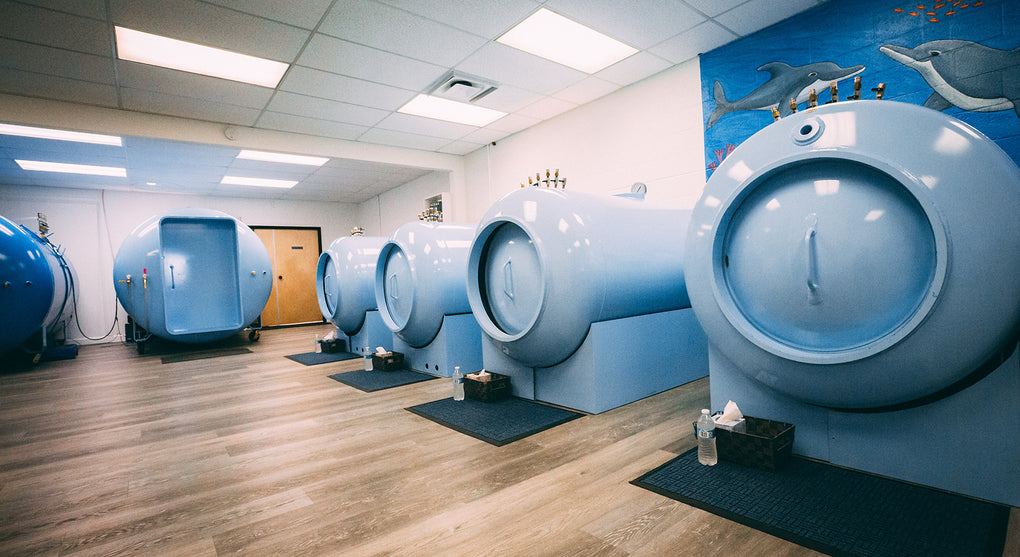
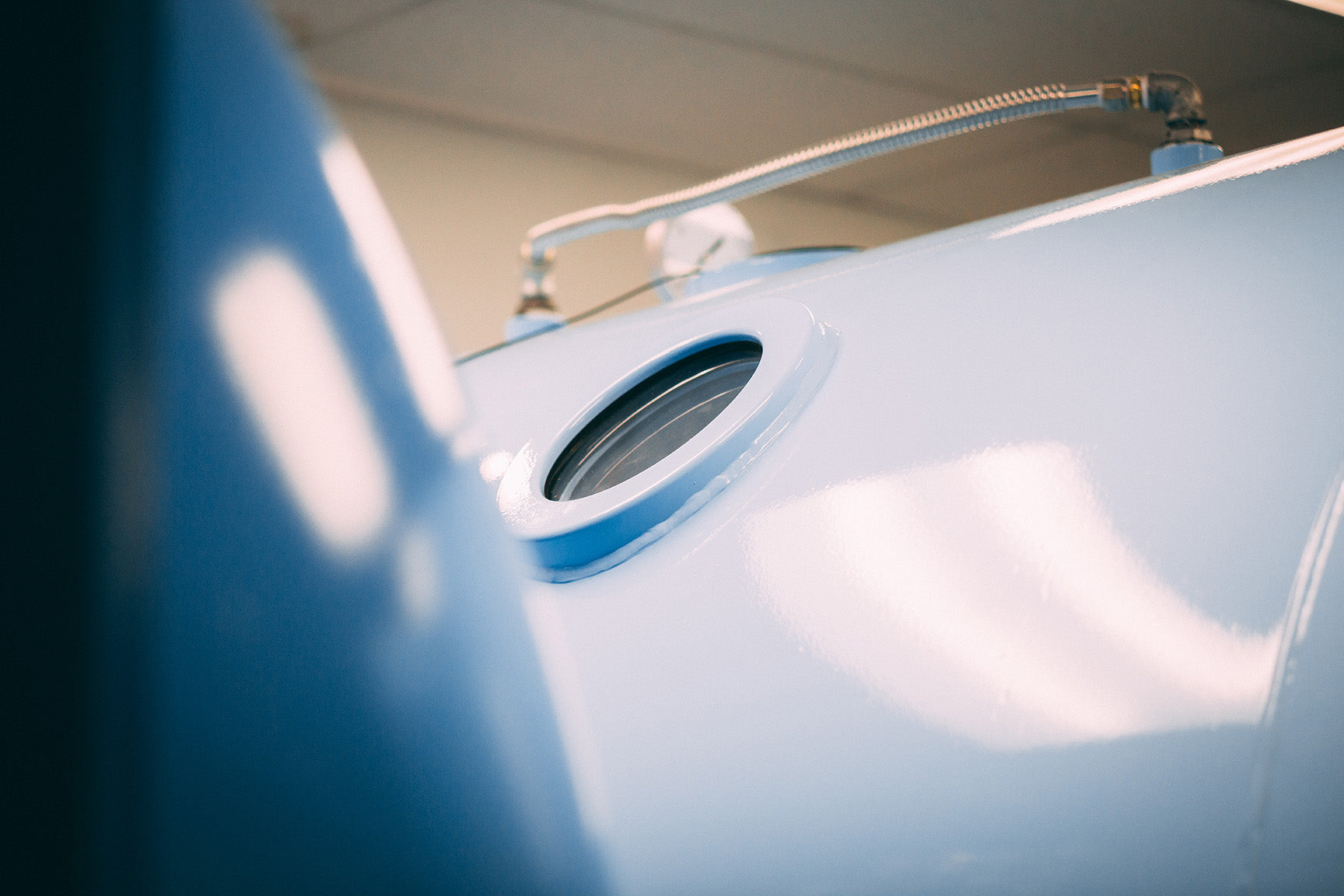
Our facilities use prescription-level hyperbaric systems, with chamber selection and treatment settings matched to your prescribed plan.
You breathe oxygen through a dedicated mask or hood while the chamber is pressurized with air. Your technicians monitor you throughout treatment.
Our technicians are certified through the National Hyperbaric Safety Association and trained in chamber operations, patient monitoring, and emergency procedures.
When consultation is appropriate
Share your established diagnosis and current treatment plan. Ask your treating clinician whether an outpatient hyperbaric consultation is appropriate.
Discuss published findings, your clinical situation, and the level of monitoring and support you need. Medical review determines suitability.
If HBOT is recommended in an appropriate setting, coordinate the prescription, follow-up, practical arrangements, and costs with your care team.
Consult before purchasing a treatment package. Our pricing and packages page provides current options. A listed package does not establish suitability for brain abscess treatment; confirm the care plan and setting first.
Local care, two Valley locations
Looking for a hyperbaric consultation near Phoenix? RX-O2 offers two locations for patients across the Valley. Call the clinic closest to you for appointment availability and help planning repeat visits.
An East Valley option for patients in Scottsdale, Paradise Valley, Fountain Hills, and nearby communities.
A West Valley option for patients in Glendale, Peoria, Phoenix, and nearby communities.
Before you contact us
Bring your questions and involve the clinicians managing your infection.
It may offer additional support in selected cases. Comparative studies and clinical reports describe encouraging outcomes when HBOT is used within a broader treatment plan. Hyperbaric guidance supports consideration in selected patients, while acknowledging limited evidence.12
No. Continue the treatment prescribed by your neurosurgical and infectious-disease teams. HBOT is an adjunct, and a consultation should never delay urgent evaluation, antimicrobial treatment, or an indicated procedure.
Examples discussed in hyperbaric guidance include multiple or deep abscesses, lesions that are difficult to treat surgically, and inadequate response to conventional care. The decision also depends on your condition and the capabilities of the treating facility.
These infections are included under the broader intracranial abscess category. Some published reports include them, but the evidence is not equally developed for every infection type. Your specialists determine the required drainage, medicines, and any additional treatment.
If you are medically stable and your treating clinician agrees an outpatient consultation is appropriate, contact RX-O2 to discuss the next step. Booking is not confirmation that treatment can be provided here. Patients needing hospital-level support should have referrals arranged by their inpatient team.
Discuss recent procedures, seizure history, imaging, devices, lung conditions, and medicines with the evaluating medical provider. HBOT risks include ear-pressure injury, temporary vision changes, and confinement anxiety, with less common serious risks such as oxygen-induced seizures and lung pressure injury. Recent neurosurgical care makes individualized assessment especially important.16, 17
RX-O2 uses FDA-cleared hard-shell chambers. Patients breathe 100% medical oxygen through a dedicated mask or hood while the chamber is pressurized with air. Physician-led care and NHSA-certified technicians support prescribed treatment. Equipment clearance does not guarantee a condition-specific outcome. Electronics and battery-powered devices are not allowed inside chambers.
Contact RX-O2 in Scottsdale at 480-270-6090 or Glendale at 623-930-0887. For a non-emergency consultation request, you can also book online.
Ask about an RX-O2 consultation in Scottsdale or Glendale and the information needed for medical review.
This page discusses ten selected research publications: nine human clinical reports or studies and one animal experiment. Guidance, reviews, and a published correction are listed separately among the references. Publications may overlap; the 2005 adult series and its 2008 republication are counted once. Other references address urgent care and HBOT safety.
Literature checked September 11, 2026. This is a source-check date, not an independent physician-review attestation or an exhaustive systematic review. These summaries are educational; a clinical evaluation is needed to discuss individual suitability.