
Home / Hyperbaric Oxygen Therapy for Avascular Necrosis

Scottsdale & Glendale, Arizona

Hyperbaric oxygen therapy for avascular necrosis

Explore an oxygen-based approach to supporting your hip health. Research into early-stage avascular necrosis reports encouraging improvements in pain, movement, and MRI findings. Meet with an RX-O2 hyperbaric specialist to discuss how HBOT could fit into your orthopedic care plan.1, 2, 9

The most relevant evidence concerns femoral-head AVN before collapse. Your diagnosis, imaging, and orthopedic recommendations help determine whether HBOT is appropriate.

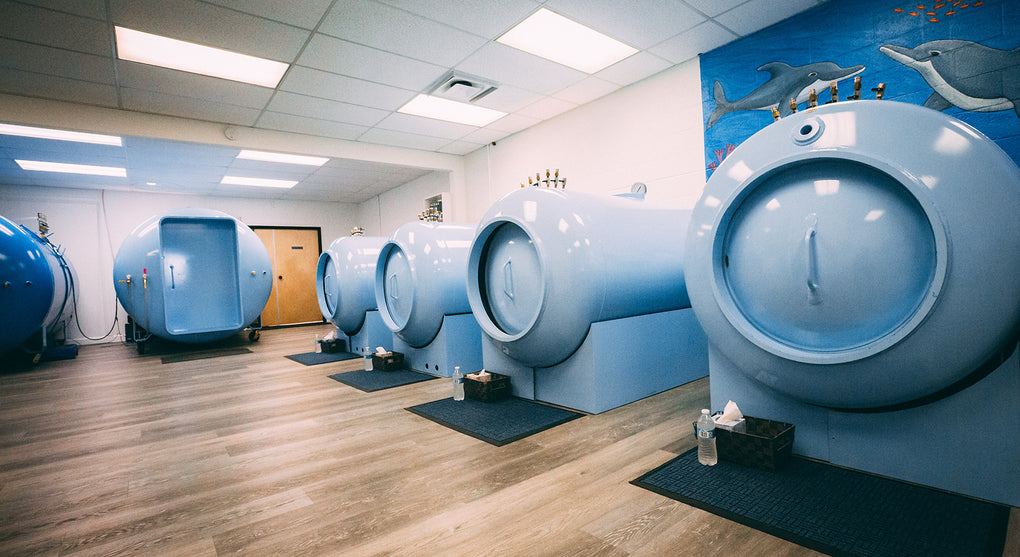
Hard-shell hyperbaric chambers in an RX-O2 treatment room
Your questions are welcome.Physician-led hyperbaric care for an informed next step.
Inside RX-O2 Hyperbaric Clinics.
FDA-cleared chambersHard-shell hyperbaric systems
100% medical oxygenBreathed through a dedicated mask or hood
Physician-led careMedical evaluation before treatment
NHSA-certified techniciansAttentive monitoring throughout your visit

Understanding the possibilities

Less pain. Better movement. A conversation about preserving your hip.

Avascular necrosis, also called osteonecrosis, develops when disrupted blood supply damages bone. The hip is a common site. HBOT research explores whether increasing oxygen delivery can support recovery in affected bone, particularly while the femoral head still retains its shape.2, 11

01 / Comfort

Potential pain relief

A small blinded trial reported pain improvement during treatment. A 2026 review also found favorable pain signals for HBOT-based care, especially when combined with core decompression. Individual responses vary.9, 1

02 / Daily life

Movement and hip function

Clinical studies have reported improvements in hip scores and range of motion. These findings support a conversation about goals such as walking more comfortably and managing everyday activities.3, 9

03 / Bone health

Encouraging imaging changes

Selected studies describe smaller MRI lesions or less bone marrow edema after treatment. Imaging improvement is promising, but does not by itself prove that HBOT prevents collapse or eliminates the need for surgery.2, 3

You do not need all the answers before contacting us. Bring your questions, your current care plan, and what you hope to understand. A consultation can help you weigh potential benefits, uncertainty, practical needs, and costs before making a treatment decision.

Evidence-based hyperbaric conversations

Explore the research on HBOT and avascular necrosis

Start with recent findings, then explore the clinical work behind them. Each summary identifies the study design so you can distinguish a promising observation from a confirmed treatment effect.

Literature checked
September 11, 2026

Network meta-analysis · July 2026

Promising signals for pain and quality of life

29 studies · 2,177 hips across several treatments

This review compared joint-preserving approaches, including HBOT, core decompression, shockwave treatment, and cell-based procedures. HBOT-based regimens, particularly HBOT plus core decompression, showed favorable pain results.

This is the total review population, not the number of hips treated with HBOT. Evidence certainty was low or very low, some comparisons were indirect, and quality-of-life estimates relied on small networks. No intervention showed a significant comparative reduction in hip replacement.

Read the 2026 comparative review

Retrospective MRI study · September 2025

Smaller lesions in early-stage hip AVN

25 patients · 37 hips · Ficat stages I–II

Researchers reported reduced MRI lesion size two months after a course of HBOT. Participants also followed a weight-bearing restriction plan.

The study had no untreated comparison group and assessed short-term imaging. It cannot separate the effect of HBOT from the accompanying care or establish long-term protection from collapse.

Read the 2025 MRI study

Blinded randomized trial · 2010

Early evidence for pain and range of motion

20 patients · Ficat stage II · six-week comparison

Patients received compressed oxygen or compressed air. Investigators reported pain improvement after 20 treatments and improved range of motion during the treatment course.

After six weeks, the comparison group was offered HBOT. The encouraging seven-year observations therefore came from an uncontrolled follow-up, not a continued randomized comparison. This small trial cannot establish a reliable surgery-avoidance rate.

Read the randomized trial

What this means for your decision

There are encouraging clinical findings worth discussing, especially in early hip AVN. However, a 2025 review found that improvements before versus after HBOT did not translate into a clear advantage on the available between-group comparisons. Its authors concluded that effectiveness was not established by the evidence reviewed. This is why a consultation should connect the research to your stage, symptoms, and orthopedic options.4

A closer look

More studies on symptoms, imaging, and joint preservation

Open each study for its main finding and the context needed to interpret it.

2025 prospective study: hip scores and MRI findings at two years

An observational study reported better pain and Harris Hip Scores, with improvements in selected MRI measures at two years. It included ARCO stages I–IIIA, so some participants had early collapse. There was no randomized untreated comparison, and the authors said the role in early collapse needs further validation. Read the prospective study.

2026 publication: HBOT, core decompression, and combined care

A retrospective study of 72 patients with Ficat stage II disease compared three groups of 24. Hip function improved in all groups; combined care produced the most favorable reported results. Treatment was not randomly assigned, so the study cannot prove equivalence between HBOT and surgery or establish the additional benefit of combining them. Published online in June 2025, in a 2026 journal issue. Read the three-group study.

2025 systematic review: improvement after treatment, with comparative uncertainty

A review of ten studies involving 568 participants found improvements in several before-and-after measures, including pain. Available comparisons with non-HBOT groups did not establish a significant advantage. Differences among studies and limited controlled evidence prevented a firm effectiveness conclusion. These studies overlap with the wider literature summarized here. Read the systematic review.

2024 single-center experience: hip and knee observations

In a small retrospective series, nine of 14 treated femoral heads had stable or improved MRI findings and ten had favorable subjective outcomes; three required surgery. The analyzed knee group also had encouraging imaging findings. Mixed joints, small numbers, and the lack of a control group limit what can be concluded. Read the clinical series.

2022 publication: coordinating HBOT with core decompression

A comparative study followed 63 patients with 80 stage II hips. Pain and hip scores improved in both HBOT-alone and combined-treatment groups, with larger improvements reported for combined care. It supports further study of an integrated approach, but does not show that every patient needs either treatment. First published online in 2021. Read the combined-treatment study.

2015 cohort: encouraging long-term joint preservation

Researchers initially reviewed 68 patients with 78 early-stage hips. At an average follow-up of about 11 years, 54 patients representing 58 hips were reached; 93% of those followed hips had survived without replacement. Missing follow-up and the absence of an untreated control mean this is not a predicted success rate for an RX-O2 patient. Read the long-term cohort.

2003 early study: MRI improvement in stage I disease

A small study treated 12 patients with selected stage I lesions and reported frequent MRI normalization. The comparison came from a previously published untreated group, rather than patients randomized in the same trial. It provided an early signal for further research, not a universal treatment protocol. Read the early clinical study.

Find newer avascular necrosis and HBOT research on PubMed · Live results may include papers that have not been assessed for this page.

Make the most of your visit

Your stage and your goals guide the conversation

Bring your MRI report, available images, and orthopedic recommendations. MRI can identify early disease and its extent; X-rays help assess structural changes. If you do not know your stage, bring what you have and ask us how to prepare.11

  • MRI and X-ray reports
  • Pain and walking limitations
  • Medicines and medical history
  • Your orthopedic care plan

Discuss the affected joint, lesion size and location, previous procedures, mobility needs, and what you hope to improve. Most HBOT evidence concerns adult hip AVN; results cannot simply be transferred to every joint or cause.

Keep your orthopedic plan moving forward. Early disease may allow hip-preserving options. If the femoral head has collapsed, joint replacement may be the most effective option. An HBOT consultation should not delay a recommended procedure.11 Continue prescribed weight-bearing precautions and ask your prescribing clinician before changing medicines, including corticosteroids.

The RX-O2 difference

Your facility matters. So does your team.

From your first questions to each treatment visit, our Scottsdale and Glendale clinics focus on medical oversight, patient education, and attentive care.

Close-up of a hard-shell hyperbaric chamber at RX-O2

Care led by a physician

Medical Director Marvin A. Borsand, DO, FACOS, FACCS, HCC, leads clinical oversight. A licensed medical provider evaluates suitability and prescribes treatment when appropriate.

FDA-cleared hard-shell chambers

Our facilities use prescription-level hyperbaric systems, with chamber selection and treatment settings matched to your prescribed plan.

100% medical-grade oxygen

You breathe oxygen through a dedicated mask or hood while the chamber is pressurized with air. Your technicians monitor you throughout treatment.

NHSA-certified hyperbaric technicians

Our technicians are certified through the National Hyperbaric Safety Association and trained in chamber operations, patient monitoring, and emergency procedures.

Meet the RX-O2 team

Getting started

A consultation is a clear first step

  1. Share your story

    Tell us about your diagnosis, symptoms, imaging, and care to date. Let the team know if you use crutches, a walker, or a wheelchair.

  2. Explore the possibilities

    Review potential benefits, treatment risks, and how the evidence relates to your stage. A licensed medical provider evaluates suitability.

  3. Plan with clear goals

    If HBOT is prescribed, discuss the schedule, orthopedic coordination, costs, and when symptoms and imaging should be reassessed.

Understand the plan before purchasing. Visit our pricing and packages page for current options. Published treatment courses vary; your medical provider determines the appropriate prescription and reassessment plan.

Local care, two Valley locations

Explore HBOT in Scottsdale or Glendale

Looking for a hyperbaric consultation near Phoenix? RX-O2 offers two locations for patients across the Valley. Call the clinic closest to you for appointment availability and help planning repeat visits.

Before your visit

Questions about HBOT and avascular necrosis

You are welcome to contact us while you are still exploring your options.

Is it worth coming in if I am unsure about HBOT?

Yes. A consultation gives you time to discuss the research, review what information is needed, and consider whether further evaluation makes sense. You do not need to commit to treatment before asking questions.

Which stage has the most relevant research?

Much of the published evidence concerns early femoral-head AVN, commonly stages I and II before collapse. Staging systems differ, so the actual imaging findings matter more than the stage number alone. Bring your reports for a discussion of how closely the research matches your situation.

Can HBOT help me avoid hip replacement?

Joint preservation is an important goal, and some cohorts report encouraging long-term outcomes. However, available evidence cannot promise that HBOT will prevent collapse or hip replacement. Decisions about surgery belong in a coordinated discussion with your orthopedic specialist.

Can HBOT be considered alongside core decompression?

Yes, this combination has been studied with promising pain and functional findings. Whether it makes sense depends on the lesion, stage, surgical plan, and medical assessment. Ask your orthopedic and hyperbaric clinicians to discuss timing and follow-up together.

Does this research apply to the knee or shoulder?

Some smaller reports involve other joints, including the knee. The main body of clinical evidence concerns the femoral head in the hip. A specialist can review your diagnosis without assuming that hip-study outcomes apply to another joint.

How many sessions will I need, and is treatment covered?

Research courses vary and do not establish one schedule for everyone. Your prescription should reflect your evaluation and response. Coverage depends on the insurer and policy; confirm benefits and total costs before starting. Our current pricing and purchase options are linked above.

What should I know about the chambers and safety?

RX-O2 uses FDA-cleared hard-shell chambers with 100% medical oxygen delivered through a mask or hood. Equipment clearance does not guarantee a condition-specific outcome. Discuss ear, sinus, lung, or seizure conditions and all medicines or devices. Risks include ear-pressure injury, temporary vision changes, and confinement anxiety; less common serious risks include oxygen-induced seizures and lung pressure injury. Follow staff instructions and fire-prevention rules, including no electronics or battery-powered devices inside chambers.12, 13

Where can I meet a hyperbaric specialist near Phoenix?

Choose RX-O2 Scottsdale or Glendale. Book online, call 480-270-6090 for Scottsdale, or call 623-930-0887 for Glendale. Let the team know about mobility or positioning needs when arranging your visit.

Bring your questions. Explore your options.

Meet with the RX-O2 team in Scottsdale or Glendale and take an informed next step for your hip health.

Sources & further reading

  1. Niu QY et al. (2026). Comparative efficacy and safety of core decompression, cell-based therapy, hyperbaric oxygen therapy, extracorporeal shock wave therapy, and combined regimens for osteonecrosis of the femoral head: a network meta-analysis. Front Cell Dev Biol.
  2. Ekici M et al. (2025). The effect of hyperbaric oxygen therapy on lesion size in early-stage femoral head avascular necrosis. Diving Hyperb Med.
  3. Ansari S et al. (2025). Hyperbaric oxygen therapy is effective and safe for femoral head osteonecrosis: a prospective midterm outcome study. Eur J Orthop Surg Traumatol.
  4. Cao Y et al. (2025). Application of hyperbaric oxygen therapy in femoral head necrosis: a systematic review and meta-analysis. EFORT Open Rev.
  5. Sun M et al. (2026). A retrospective comparison of hyperbaric oxygen and core decompression for mild to moderate avascular necrosis of the femoral head. Med Gas Res.
  6. Currie JR et al. (2024). The use of hyperbaric oxygen for avascular necrosis of the femoral head and femoral condyle: a single centre's experience over 30 years. Diving Hyperb Med.
  7. Bozkurt I et al. (2022). Combination of hyperbaric oxygen and core decompression therapies improve outcomes in the treatment of hip osteonecrosis. Hip Int.
  8. Koren L et al. (2015). Hyperbaric oxygen for stage I and II femoral head osteonecrosis. Orthopedics.
  9. Camporesi EM et al. (2010). Hyperbaric oxygen therapy in femoral head necrosis. J Arthroplasty.
  10. Reis ND et al. (2003). Hyperbaric oxygen therapy as a treatment for stage-I avascular necrosis of the femoral head. J Bone Joint Surg Br.
  11. American Academy of Orthopaedic Surgeons. Osteonecrosis of the Hip.
  12. FDA (2025). Follow Instructions for Safe Use of Hyperbaric Oxygen Therapy Devices.
  13. Heyboer M III et al. (2017). Hyperbaric Oxygen Therapy: Side Effects Defined and Quantified. Advances in Wound Care, 6(6), 210–224.

This page discusses ten selected research publications. Reviews summarize earlier studies and are not independent treatment trials. Original studies and reviews may include the same participants. Other references address orthopedic care and HBOT safety.

Literature checked September 11, 2026. This is a source-check date, not an independent physician-review attestation or an exhaustive systematic review. These summaries are educational; a clinical evaluation is needed to discuss individual suitability.